
Wild Fruits
Since 2017, the SAVE project office in St. Gallen, Switzerland, has been developing an information platform on wild fruit. The online platform Inforama Wild Fruit lists and describes the diversity of over 300 species and more than 2,000 varieties of wild fruit that thrive in Central Europe. The website’s main topics are available in three languages (German, French, and English).
SAVE makes wild fruit visible not only virtually but also physically: In 2019, an overview collection was established near the botanical garden in St. Gallen, and in 2020, a comprehensive collection of around 1,100 plants representing approximately 200 species was created in Mogelsberg, Switzerland.
During the season, guided tours with tastings are regularly offered to raise public awareness of wild fruit in nature, in our gardens, and in relation to food and agriculture. Between 2020 and 2025, brochures were produced, recipes developed, and several top chefs were recruited to contribute their expertise.
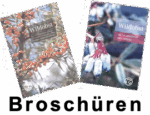
A brochure with recipes and a brochure about Culture, customs and legends (available only in German) was created.
More informationin german, french and english is available at: www.wildobst.info
Der Arca-Deli Award
The Arca-Deli® Award is a prestigious recognition for delicacies and/or innovative services offered by keepers and breeders of traditional livestock breeds or cultivated plant varieties.
Since 2011, the Arca-Deli® Award has been granted annually by a panel of experts during the SAVE Annual Meeting. Awarded products and services may carry the Arca-Deli® label – marked with the year of the award – and are issued with a certificate.
Eligibility criteria:
Products or services (PoS) must meet the following conditions:
The product or service must originate from a farm that is either registered in the European Ark Network “Arca-Net” or has received explicit approval from a partner organization of the SAVE Foundation.
The product or service must contribute to the in situ / on-farm conservation of an indigenous breed or variety.
The product or service must be of above-average quality.
The product or service should serve as a model or example of best practices.
Submission:
Products and/or services may be submitted once per year to the Arca-Deli® Award jury committee of the SAVE Foundation. A call for submissions is published in advance of the SAVE Annual Meeting. Each farm may submit a maximum of two products per year. A product may only be awarded once; resubmission of the same product in subsequent years is excluded. The jury decides whether a product is admitted to the Arca-Deli® Award competition. Employees of the SAVE Foundation are not eligible to participate. The application form is available here.
Evaluation:
The award is granted by the SAVE Board of Trustees based on the recommendations of a three-member jury committee. The decision is final and no correspondence will be entered into.
Awarding:
For each product or service awarded, a certificate is issued. The product or service is entitled to carry the Arca-Deli® logo with the year of the award. The award applies exclusively to the specific product, not to the entire production site. A record of previously awarded products and services can be found here: Arca-Deli® Awards Chronicle.
A short description of the Arca-Deli® Award is included in the flyer “Labelling diversity in Europe: 3 examples” of the H2020 project DYNAVERSITY.
IMAGE – Innovative Management of Animal Genetic Resources
“Innovative Management of Animal Genetic Resources” (acronym IMAGE) was a project funded by the Horizon 2020 Research and Innovation Programme of the European Union.
It started on March 1st, 2016 for four years and united 28 partners, including three SMEs, three NGOs, the Food and Agriculture Organization of the United Nations (FAO), nine research institutions, 11 higher education and research institutions, and INRA Transfert, a subsidiary of INRA, the co-ordinating partner. 13 EU countries have been involved, together with Switzerland and four non-European countries: Argentina, Colombia, Egypt and Morocco.
The ultimate goal of the project is to demonstrate the benefits brought by gene banks to the development of more sustainable livestock farming systems.
The project is organised in six research work packages (WP), one dissemination WP and the management WP.
“Raising awareness about the value of animal gene banks will contribute to popularising them in the society as a whole, since they represent both a heritage and a resource for the future.”
SAVE was involved in the workpackage “Multi actor participation and knowledge exchange”. The contribution of WP1 to this general objective was to understand and formalise the expectations of stakeholders regarding gene banks and to identify gaps or needs. Thus, IMAGE WP1 addressed the needs for communication and knowledge exchange between all stakeholders regarding the management of animal genetic resources.
In this frame SAVE organised together with partners four so called Dialogue Fora”: The IMAGE Dialogue Forum were run as a platform to involve all stakeholders in the discussion about the future of genetic management of farm animals. This included scientists, government officials, NGO and industry representatives, as well as breeding/farmer’s associations. The annual meetings took place in association with big scientific conferences like EAAP and ERFP). Topcs of the meetings were:
1. Farm animal genebanks: Conservation priorities and future perspectives
2. Sanitary Regulations: Possibilities and hindrances for the exchange of genebank material for breeding and science”
3. Economics of Conservation – View and experiences
4. ABS rules in the EU
Donkey Breeds in Europe
Donkey keeping in Europe has undergone a fundamental change. In South and Southeast Europe donkeys as “Tractor of the common man” are not highly valued. The stock numbers in the southern European countries are falling dramatically. For example the stock numbers fall continuously in Greece – despite the import of donkeys for milking in recent times. In Northern and Central Europe the hobby keeping increases: The donkey has in some places become a status symbol. This does hardly keep the decline in stock numbers in Europe because the increase in the North is less than the loss in the South. Furthermore, except a few special breeds like the Poitou Donkey breeding hardly takes place. Especially in the North little emphasis is placed on selection. The Domestic donkey, its requirements and needs are today barely familiar. Misunderstandings and prejudices continue to be mentioned this intelligent, durable and versatile Livestock. Even among the veterinary’s knowledge of the treatment of donkeys is diminishing. Thus, barely veterinary books for the treatment of donkeys exist. Donkeys are not just horses with long ears, they show important differences like for example one lumbar less than a horse, their blood cells are larger, but less than in horses. In general donkeys are far too less researched. There are still many surprises to discover behind the long eared bats.
The ecological value of feral livestock populations in Europe
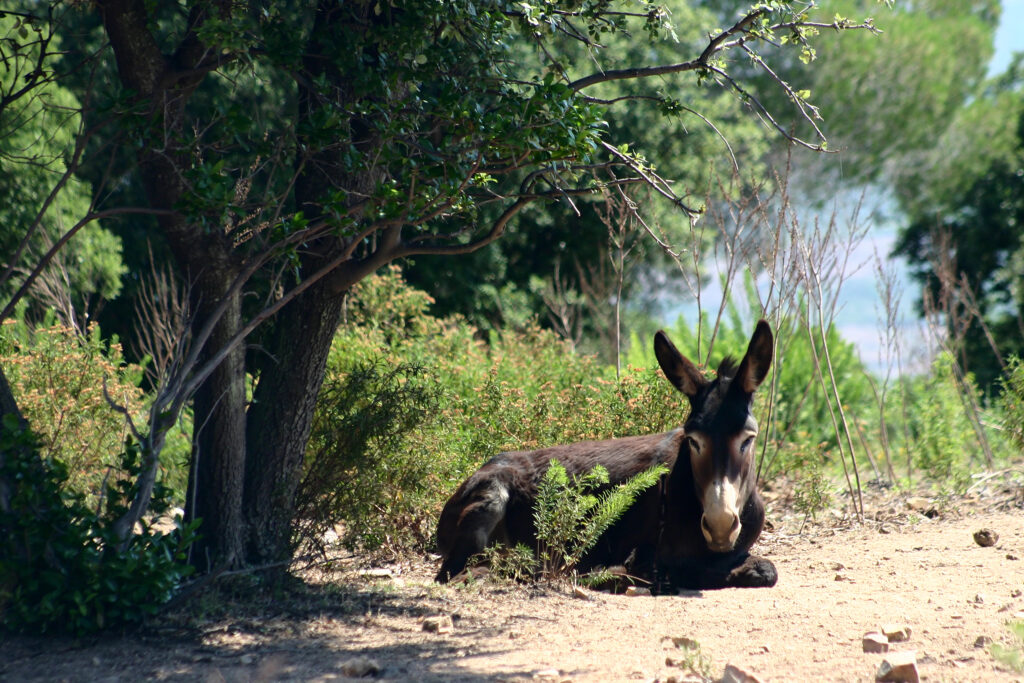
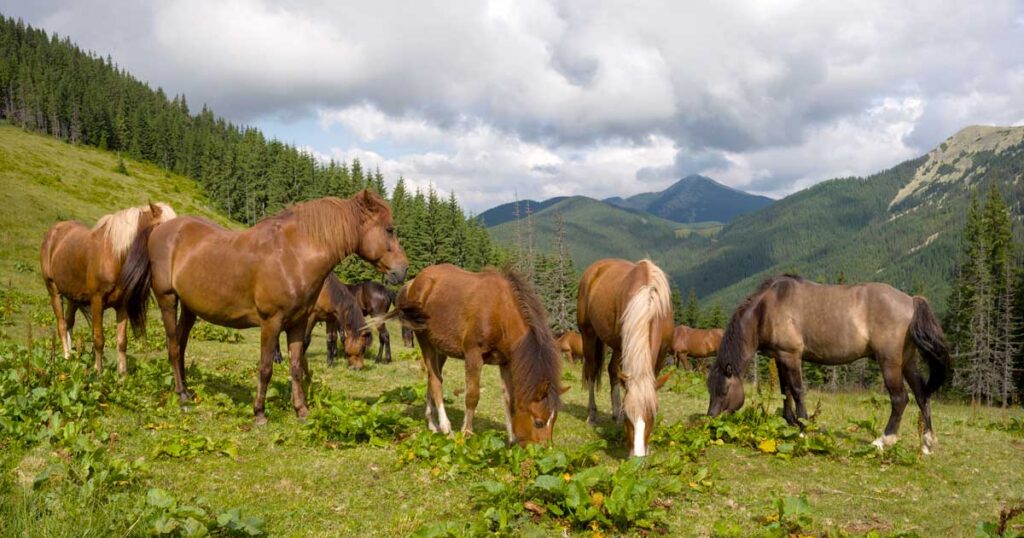
In many parts of Europe, horses, cattle, goats and sheep have been left to themselves – sometimes due to migration away from war zones or disadvantaged rural areas. These feral or semi-feral populations have often been more or less ignored. Unless, of course, they disturb forestry or agriculture through disease, damage, cross-breeding, fodder or water competition. Nature protection bodies view these populations ambivalently: on the one hand, these livestock populations have a massive impact on the eco-system balance, on the other hand they are put to use as semi-feral populations in the conservation of natural and park landscapes.
The interaction between the management of indigenous livestock breeds and the traditional agro-ecosystems are of great importance to conservation of both types of biodiversity – the wild and the domesticated.
Up to now there has been no overview of the European feral and semi-feral livestock populations. With the project “The Ecological Value of Feral Populations in Europe” SAVE Foundation addresses this issue and the problems surrounding the often forgotten feral and semi-feral populations. The project aims to collect data and information about the occurrence of feral breeds and varieties of livestock, to network key persons from the In Situ – On Farm conservation work as well as nature protection organisations and to develop plans for “best management”. In an empiric study SAVE Foundation worked out an overview of free ranging livestock populations in Europe, impulses and ways to preserve our unique traditional cultural landscape and at the same time to preserve locally adapted traditional livestock breeds
The final report is available as download in English and in German.
A list of all recorded populations is available here: Feral List